
By Kourtney Wagner
March 30, 2026
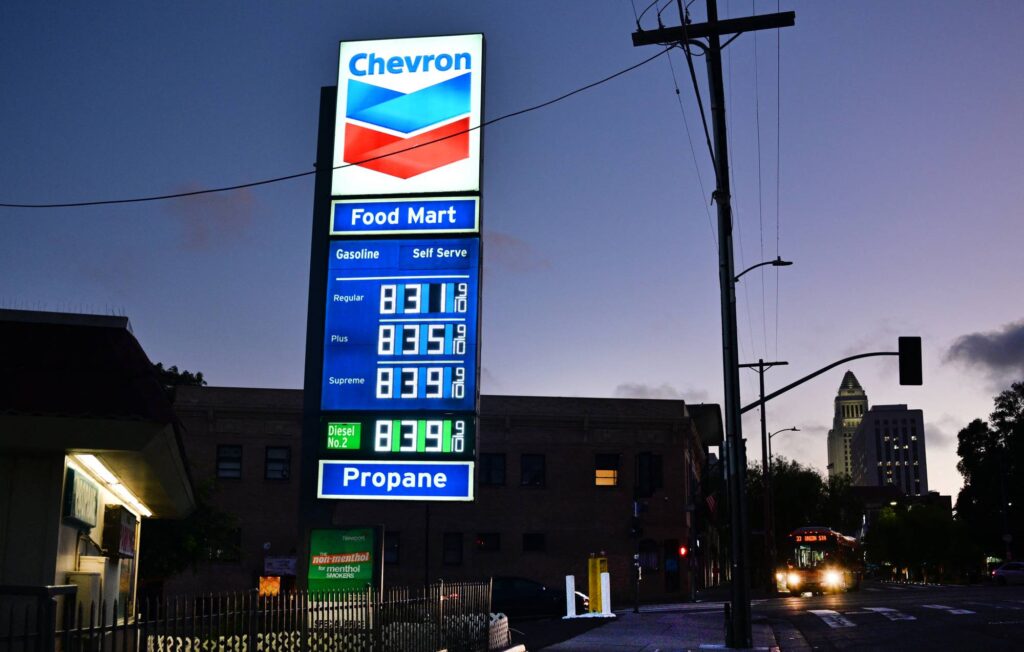
Las Vegas, NV — The escalating conflict between the United States and Iran has sent global oil prices soaring, pushing average gasoline costs above $3.80 a gallon nationwide and nearing $4.50 in some Western and Northeastern states, according to AAA data released Saturday. The sharp rise, the steepest since the early weeks of the war in late February, is delivering an immediate hit to American households already strained by inflation, with economists warning of broader ripple effects on food prices, heating bills and consumer spending.
The trigger was renewed Iranian threats to disrupt shipping through the Strait of Hormuz — the narrow chokepoint through which roughly one-fifth of the world’s oil supply flows — following American and Israeli strikes on Iranian oil infrastructure. Brent crude futures jumped more than 12 percent in the past week alone, closing Friday at $92.40 a barrel, the highest level since October 2023.
“Every time the tankers slow down or the insurance rates spike, it shows up at the pump within days,” said Sarah Chen, a senior energy analyst at Goldman Sachs, which revised its forecast Friday to predict an additional 10,000 to 15,000 job losses per month if the disruption lasts beyond April. “This is no longer a foreign-policy story. It is a pocketbook story for millions of Americans.”
For families like the Rodriguezes in Phoenix, the numbers are already painful. Maria Rodriguez, a school bus driver and mother of two, said her weekly fill-up now costs $85 instead of $62 a month ago. “We’re skipping the grocery store sales and eating more rice and beans,” she said. “My husband drives for Uber. If gas hits $4.50, he’s talking about parking the car on weekends.”
The war’s economic fallout is not limited to gasoline. Diesel prices have climbed 18 percent in three weeks, raising costs for trucking and farming that are expected to add 15 to 25 cents a gallon to milk, bread and produce by late spring, according to the Agriculture Department’s latest outlook. Home heating oil, still widely used in the Northeast, has risen 22 percent, prompting some states to reopen emergency fuel-assistance programs that were scheduled to close this month.
The administration has moved to release 1.2 million barrels from the Strategic Petroleum Reserve on an emergency basis, but officials acknowledged the move would provide only temporary relief. Energy Secretary Chris Wright told reporters Friday that “the best way to lower prices is to end the Iranian threat,” while declining to say when that might happen.
Political analysts say the timing could not be worse for President Trump as he heads into the 2026 midterm campaign. A new Quinnipiac University poll released Saturday found that 61 percent of voters now rank “rising costs at the pump and in the grocery store” as their top concern, eclipsing immigration and border security for the first time since Mr. Trump took office. Even among self-identified Republican voters, 38 percent said the Iran conflict was “hurting the economy more than it is helping national security.”
In a sign of internal tension, several House Republicans from swing districts in Pennsylvania, Michigan and Wisconsin have begun quietly urging the White House to de-escalate, according to two GOP lawmakers who spoke on condition of anonymity. “My constituents don’t want endless war in the Middle East,” said one, a freshman from suburban Detroit. “They want $2.50 gas and a stable paycheck.”
Democrats, meanwhile, have seized on the issue, with Senate Minority Leader Chuck Schumer calling the price surge “Trump’s inflation tax on working families” in a floor speech Friday. Progressive groups have begun organizing “Pump Pain” town halls in battleground states, linking the war directly to the affordability crisis that polls show is already eroding Republican support in the suburbs.
Economists remain divided on how long the pain will last. If Iran’s threats remain mostly rhetorical and shipping lanes stay open, analysts at JPMorgan Chase project prices could ease back to $75 a barrel by June. But a sustained closure of the Strait — even for a few weeks — could push Brent above $110, tipping the economy into a mild recession by the third quarter, according to Moody’s Analytics.
For now, the human impact is immediate and visible. Truck stops along Interstate 80 in Nebraska and Iowa report drivers idling their rigs longer to save fuel. Ride-share drivers in Los Angeles and Atlanta are adding surcharges or canceling shifts. And in rural counties from Maine to Oregon, where residents commute 30 miles or more each way for work, local officials say food-bank demand has already risen 12 percent since the price spike began.
With the midterms less than eight months away and control of both chambers of Congress at stake, the war’s economic consequences are rapidly becoming a central campaign issue. Whether voters ultimately blame Tehran, the White House or both will likely shape the political landscape far beyond the current fighting in the Gulf.