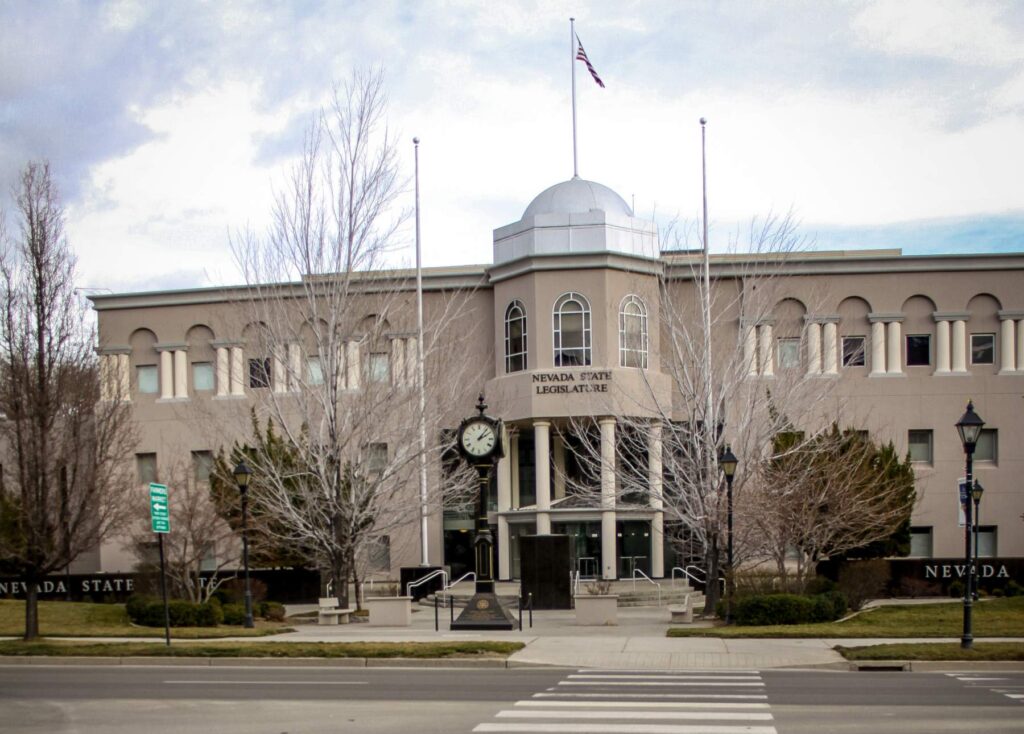
The Nevada Legislature stands as the bicameral lawmaking body of the state of Nevada, comprising the Nevada Assembly (lower house with 42 members) and the Nevada Senate (upper house with 21 members). It ranks as one of the smallest state legislatures in the U.S., with a total of 63 members, and operates under the Nevada Constitution of 1864. Its history intertwines with Nevada’s rapid path to statehood during the Civil War, the boom-and-bust cycles of mining, population growth in Las Vegas, and evolving political dynamics.Territorial Origins (1861–1864)The Nevada Territorial Legislature formed upon the creation of the Nevada Territory on March 2, 1861, carved from the western part of Utah Territory by an act of Congress signed by President James Buchanan. This move aimed to bolster Union support amid the Civil War and exploit the Comstock Lode’s silver riches.The first Territorial Legislature convened on October 1, 1861, in Genoa initially, then moved to Carson City. It featured a Council (upper house, precursor to the Senate) with 9–13 members and a House of Representatives (lower house). Key actions included:
- Establishing nine original counties.
- Organizing government structures.
- Laying groundwork for statehood.
Three territorial sessions occurred before statehood. The third, in 1864, helped draft the state constitution.Nevada’s push for statehood accelerated to secure Republican electoral votes for Abraham Lincoln’s 1864 reelection and to ratify the 13th Amendment abolishing slavery. The full constitution—telegraphed to Washington, D.C., at great expense—was approved, and Nevada entered the Union on October 31, 1864, as the 36th state.Early Statehood and the First Sessions (1864–1900)The first state legislative session began in 1864–1865, with 18 senators and more assembly members. Early legislatures met in makeshift locations, including the Warm Springs Hotel near Carson City (site of the future state prison).In 1869, lawmakers passed the State Capitol Act, funding construction of the Nevada State Capitol in Carson City. Completed in 1871, this sandstone building hosted sessions starting with the fifth session. It featured a distinctive silver-colored dome and served as the meeting place for a century.Early priorities included mining regulation, railroad development, water rights, and gaming oversight. The legislature fluctuated in size: the Senate peaked at 25 members (1875–1879) and bottomed at 15 (1891–1899). Sessions were annual until 1867, then shifted to biennial (odd-numbered years).20th Century Developments: Growth, Reform, and MilestonesBy the early 1900s, population growth necessitated expansions to the Capitol, with wings added in 1915 designed by architect Frederic DeLongchamps.Key milestones included:
- 1918 → Sadie Hurst became the first woman elected to the legislature (Assembly, Republican from Washoe County).
- 1920 → In a special session on February 7, the legislature ratified the 19th Amendment (women’s suffrage), with Hurst presenting the resolution—she also became the first woman to preside over a state legislature during ratification.
The Great Depression and New Deal era brought federal influences, while post-World War II growth in Las Vegas shifted power southward.In 1958, voters removed the constitutional 60-day session limit, allowing longer meetings (previously, legislators “covered the clock” to extend the 60th day).Term limits arrived in 1996, capping members at 12 years total service (three Senate terms, six Assembly terms).Modern Era: New Building, Population Boom, and Political Shifts (1970–Present)Rapid growth in Clark County (Las Vegas area) outpaced the Capitol’s capacity. In 1971, the legislature moved to the new Nevada Legislative Building south of the Capitol, expanded in 1997 to accommodate larger staffs and public access.The legislature stabilized at 42 Assembly members and 21 senators in 1983, reflecting reapportionment after censuses. Redistricting often proved contentious—after the 2010 census, a court imposed districts when the legislature and governor deadlocked.Sessions now last up to 120 days (since a 1998 constitutional amendment), with frequent special sessions for budgets or emergencies.Notable recent achievements:
- 2019 — The 80th Session became the first majority-female bicameral legislature in U.S. history.
- Democrats have held majorities in both chambers since the mid-2010s, though Nevada remains a swing state with divided government at times.
As of 2025, following the 83rd Session (February 3–June 3, 2025) and a 36th Special Session in November 2025, Democrats maintain control.Structure and Operations TodayThe Nevada Legislature is part-time and citizen-based. Assembly members serve two-year terms, senators four-year staggered terms. It convenes biennially in odd years (next: 2027), with the governor or supermajority petition able to call specials.Key features include:
- Nonpartisan elections for some roles.
- Strong committee system.
- The Legislative Counsel Bureau providing nonpartisan staff support.
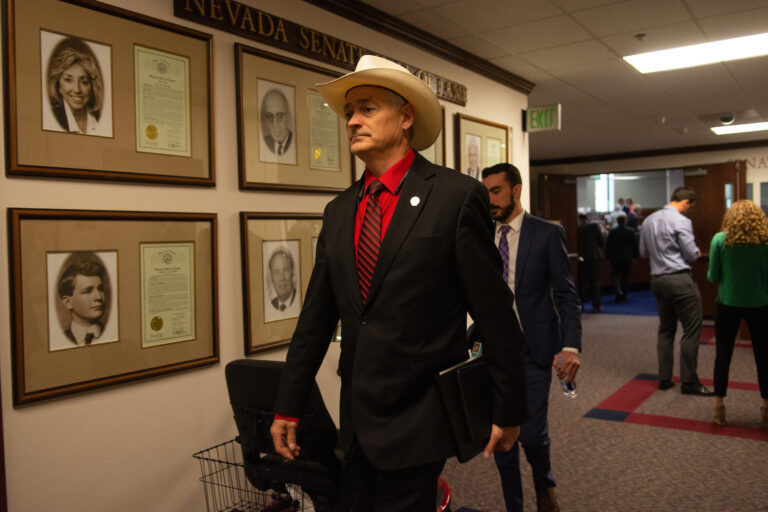
Traditions persist, such as occasional sessions in the old Capitol chambers and portraits honoring figures like Abraham Lincoln (reflecting statehood ties).The Nevada Legislature has evolved from a frontier assembly fueling Union war efforts to a modern body addressing gaming, tourism, water scarcity, renewable energy, education funding, and urban growth in Las Vegas. Its history mirrors Nevada’s transformation from mining outpost to entertainment capital and diverse swing state. For more, visit the official site at leg.state.nv.us or explore historical documents from the Legislative Counsel Bureau.