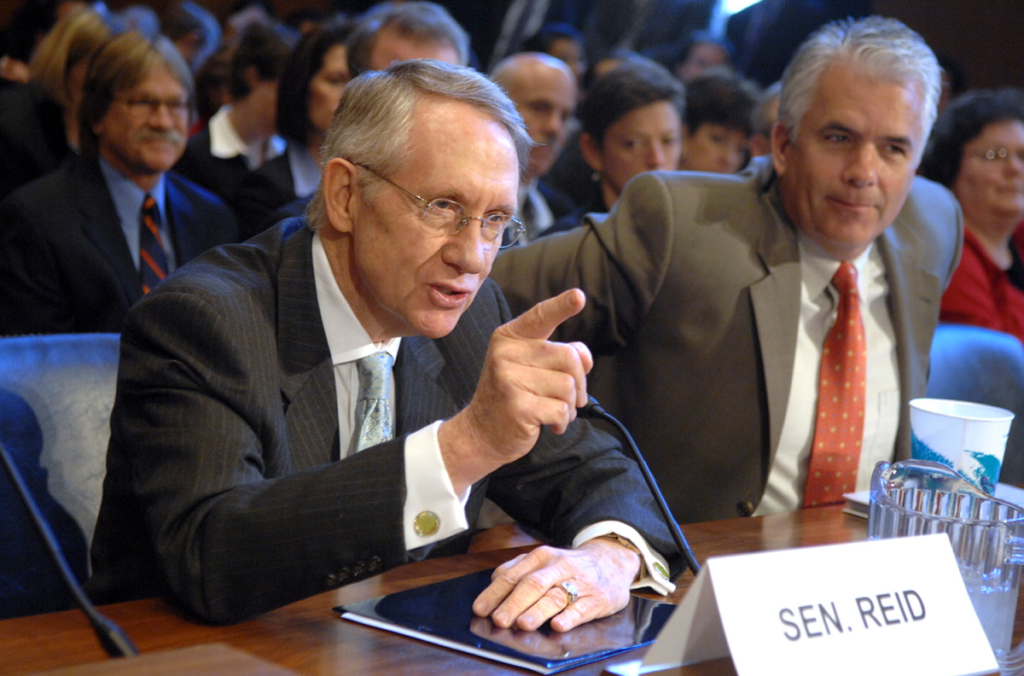
Harry Mason Reid Jr., one of the most influential figures in modern American politics, rose from abject poverty in a remote Nevada mining town to become the longest-serving U.S. Senator from Nevada and one of the longest-tenured Senate Majority Leaders in history. His journey embodies the American dream tempered by hard-knock realism—a former amateur boxer who brought a fighter’s tenacity to Washington. Reid passed away on December 28, 2021, at age 82, leaving behind a profound legacy in Nevada politics, environmental conservation, and national legislation.
Early Life: Hardship in SearchlightBorn on December 2, 1939, in the tiny desert town of Searchlight, Nevada—a former gold-rush outpost with no high school, stoplights, or even indoor plumbing in many homes—Reid grew up in stark poverty. His father, Harry Sr., was an alcoholic hard-rock miner who later died by suicide in 1972. His mother, Inez, took in laundry from local brothels to support the family of four boys. Their home was a modest shack built from railroad ties.To attend high school, young Harry hitchhiked 40 miles to Henderson. There, he discovered boxing, channeling his competitive energy into amateur fights—a passion that shaped his combative political style. He graduated from Basic High School, where he met his future wife, Landra Gould (they married in 1959 after eloping due to family opposition).
Reid converted to Mormonism in college, influenced by a supportive teacher.Education became his escape route. He earned an associate degree from Southern Utah University (1959), double-majored in political science and history at Utah State University (1961), and worked nights as a U.S. Capitol Police officer while attending George Washington University Law School, graduating with a J.D. in 1964.Entry into Politics: Nevada RootsReid’s political career began locally. After passing the bar, he returned to Nevada as city attorney for Henderson. In 1968, at age 28, he was elected to the Nevada Assembly. Two years later, he became Nevada’s youngest Lieutenant Governor (1970–1974) under Governor Mike O’Callaghan, his former high school teacher and boxing coach.In 1977, Reid chaired the Nevada Gaming Commission, a perilous role during Las Vegas’s mob-influenced era. He faced death threats and even participated in an FBI sting against a bribe attempt. His tough stance helped clean up gaming regulation.Reid’s early bids for higher office were mixed: losses in a 1974 Senate race and 1979 Las Vegas mayoral bid.
But in 1982, he won Nevada’s 1st Congressional District seat in the U.S. House, serving two terms.U.S. Senate Career: Rise to PowerIn 1986, Reid narrowly won a U.S. Senate seat, beginning a 30-year tenure (1987–2017) that made him Nevada’s longest-serving senator. Initially a moderate Western Democrat—pro-gun, anti-abortion, supportive of mining interests—he evolved toward progressive positions.Reid climbed Democratic leadership: Senate Whip (1999–2005), Minority Leader (2005–2007, 2015–2017), and Majority Leader (2007–2015)—one of only three senators to serve eight+ years in that role.Key Achievements and Legislative LegacyReid was a master tactician, known for blunt dealmaking and partisan fights. Major accomplishments include:
- Healthcare Reform: As Majority Leader under President Obama, Reid shepherded the Affordable Care Act (Obamacare) through the Senate in 2010, a landmark expansion of coverage despite fierce opposition.
- Economic Recovery: Helped pass the 2009 American Recovery and Reinvestment Act to combat the Great Recession.
- Financial Reform: Co-sponsored the Dodd-Frank Act (2010) for Wall Street oversight.
- Environmental Conservation: A passionate advocate, Reid protected millions of Nevada acres, established Great Basin National Park, promoted renewable energy (Nevada became a solar leader), and earned lifetime awards from conservation groups.
- Nevada-Specific Wins: Secured funding for infrastructure, water projects, and tourism; built the “Reid Machine”—a powerful Democratic organizing network that turned Nevada reliably blue.
- Other Milestones: Blocked Bush-era Social Security privatization; supported the DREAM Act and LGBTQ+ rights (evolving on same-sex marriage).
Reid’s style—abrupt phone hang-ups, sharp rhetoric—earned enemies but respect for effectiveness. Even Republican rival Mitch McConnell praised his tenacity.Later Years, Retirement, and PassingIn 2015, a home exercise accident caused severe injuries, including vision loss. Reid announced retirement in 2016, endorsing Chuck Schumer as successor and Catherine Cortez Masto to his seat (she won, becoming the first Latina senator).Diagnosed with pancreatic cancer in 2018, Reid underwent treatment; remission announced in 2019. In a poignant honor, Las Vegas’s main airport was renamed Harry Reid International Airport just weeks before his death.Reid died peacefully at home in Henderson on December 28, 2021, surrounded by family (wife Landra, five children, grandchildren).
Tributes poured in from Biden, Obama, Clinton, and McConnell. His funeral featured eulogies from presidents; he lay in state at the U.S. Capitol.Enduring LegacyHarry Reid transformed Nevada from red to blue, championed the underdog, and left indelible marks on healthcare, finance, and the environment. As Obama said, “I wouldn’t have been president had it not been for your encouragement and support.” From Searchlight’s dust to Senate power, Reid’s story is one of grit, loyalty, and fighting for what he believed was right. His impact endures in policies, places, and the leaders he mentored.