By Kourtney Wagner
March 30, 2026
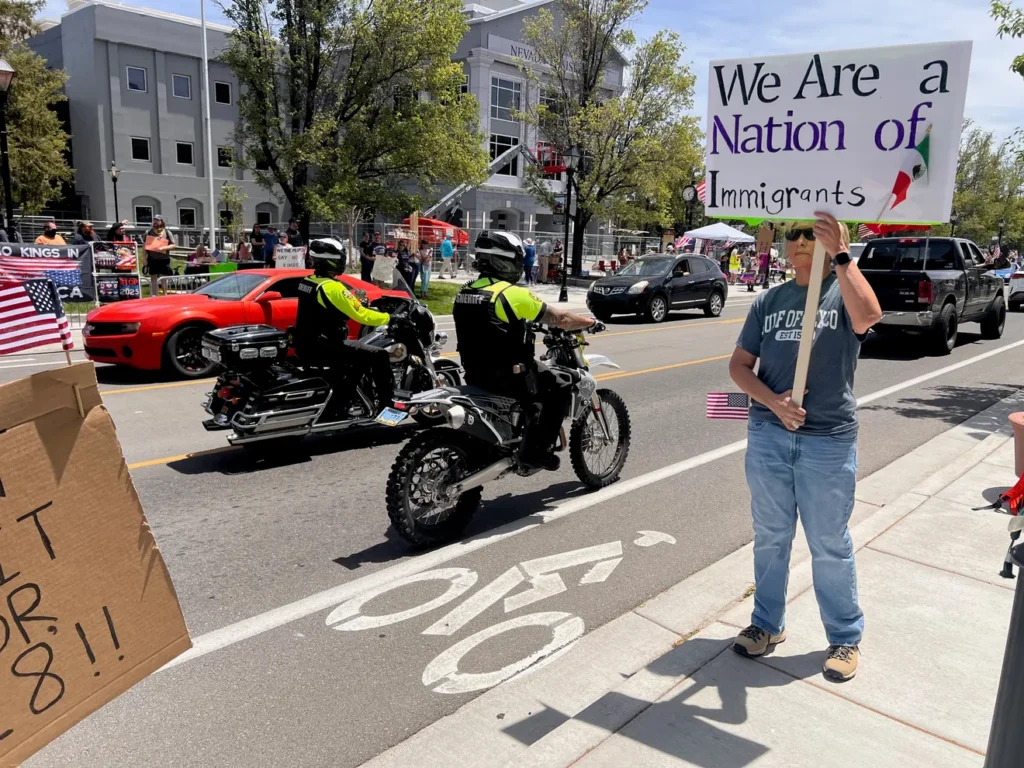
Las Vegas, NV — In a coordinated display of opposition that organizers and independent analysts described as the largest single-day protest in American history, more than eight million people gathered across the United States on Saturday for the third wave of “No Kings” demonstrations. More than 3,300 events unfolded in every state, from packed urban streets in New York and Los Angeles to town squares in small communities, as participants decried President Trump’s second-term policies on immigration enforcement, the ongoing war with Iran and what they called an erosion of democratic norms.
The protests, organized under the banner of the No Kings movement — a loose coalition of progressive groups including 50501 and Indivisible — built on two earlier nationwide mobilizations. Saturday’s turnout far exceeded prior iterations, with estimates from organizers and local officials placing the combined participation at eight to nine million people in the United States alone, plus smaller solidarity actions in more than a dozen other countries.
One of the largest rallies took place outside the Minnesota State Capitol in St. Paul, where the singer Bruce Springsteen performed a new song, “Streets of Minneapolis,” written as a tribute to the city’s resistance to federal immigration crackdowns. The performance drew tens of thousands who held signs bearing the names of Renée Good and Alex Pretti, two Minnesota residents fatally shot by federal immigration agents earlier this year while documenting enforcement operations.
In New York, crowds stretched more than 10 blocks through Midtown Manhattan. In Boston, organizers estimated 180,000 people filled the Common — double initial expectations. Smaller gatherings in rural and suburban areas marked a notable shift: nearly two-thirds of events occurred outside major cities, a nearly 40 percent increase from the movement’s first mobilization last June.
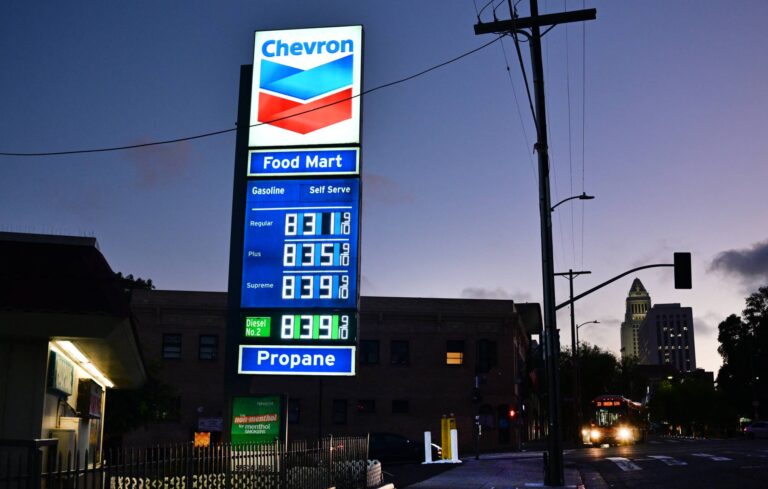
The grievances were broad but unified by a central theme: rejection of what protesters called an authoritarian drift under the Trump administration. Signs and chants targeted mass deportations and aggressive Immigration and Customs Enforcement operations, which have included reported shootings and the deployment of thousands of federal agents into communities. Many also condemned the administration’s role in the U.S.-Israel strikes on Iran that began in late February, which have driven up global oil prices and contributed to gasoline costs approaching $4 a gallon in parts of the country.
“Trump poses an existential threat to the very idea of self-government,” the actor Robert De Niro told a crowd in one major rally, echoing a sentiment repeated at dozens of sites. In Washington, speakers including Senator Chris Murphy of Connecticut, the science communicator Bill Nye and the journalist Mehdi Hasan addressed a demonstration near the Capitol, linking the Iran conflict to rising living costs and what they described as a diversion from domestic priorities.
The protests unfolded mostly peacefully, though scattered incidents were reported. In downtown Los Angeles, police issued dispersal orders and made arrests after some demonstrators clashed with officers near the Metropolitan Detention Center, with tear gas deployed in isolated confrontations. In Dallas, counterprotesters, including a group led by the former Proud Boys leader Enrique Tarrio, faced off with No Kings participants.
White House officials did not immediately comment on the scale of the demonstrations. A senior administration aide, speaking on condition of anonymity, dismissed the events as “the same tired voices from the radical left” and pointed to Mr. Trump’s strong polling among his base as evidence that the protests reflected fringe discontent rather than broad public sentiment.
Historians and protest researchers drew comparisons to past mass mobilizations, including the 2017 Women’s March and the 2020 Black Lives Matter protests after the killing of George Floyd. But several noted the geographic breadth and speed of Saturday’s actions — coordinated largely through digital networks and local chapters — set a new benchmark.
“This is not just about one policy or one grievance,” said Hunter Dunn, an organizer with 50501, one of the groups behind the No Kings brand. “It’s about people saying, loudly and clearly, that no one — not even a president — is above the law or the Constitution.”
Organizers emphasized that Saturday was not an endpoint. The No Kings website already lists follow-up actions, including community meetings and voter registration drives aimed at the 2026 midterm elections. In interviews, participants across age groups and political backgrounds — including some self-described former Trump voters frustrated by gas prices and immigration enforcement tactics — said they planned to stay engaged.
In Portland, Ore., a marcher who identified herself only as a retired teacher from a swing-district suburb captured a sentiment heard repeatedly: “I didn’t vote for endless war, $4 gas and federal agents shooting people in my neighborhood. This is about reminding everyone in power that we are the ones who decide.”
With the midterms less than eight months away and control of Congress hanging in the balance, political strategists on both sides are watching whether the energy from these protests translates into sustained turnout at the polls — or dissipates as economic pressures and foreign policy developments continue to dominate headlines.
For now, the images from Saturday — vast crowds under “No Kings” banners from coast to coast — stand as a vivid snapshot of a nation deeply divided over the direction of its government.